Movement!
Lots of things have been in flow since I’ve posted here, but here are few tidbits to explore:
Lots of things have been in flow since I’ve posted here, but here are few tidbits to explore:

Say that we agree to define collaboration as a group’s ability to coordinate effort to produce some work output. I believe that the effectiveness of collaboration improves in direct proportion to:
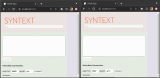
Usually I am more energized by building tech than by talking about it, but I am so excited about what my son and I did over winter break, that I just have to share about it here. In an odd kind of busman’s holiday, I spent a good chunk of my time off writing a Holochain application. Coding with my kid is just pure pleasure for me, but I have to describe the additional incredible experience of having spent 4 years building a tool, and now suddenly being able to use that tool to build what it was meant for: creating collaboration applications.
As is pretty obvious I don’t write much here. My focus for the last 4 years has been pretty singular on getting Holochain and Holo built. And writing takes me a long time. I also have a hard time writing to the void of the Internet, I need to be in a direct conversation to share well. Recently a friend made an open invitation to respond “about what you’re seeing and thinking in the world right now.” and he provided these prompts:

I haven’t written much lately, I guess I’ve been busy… mostly with two things: Cancer & Ceptr.
Currently, my time is about living with a spouse with stage 4 metastatic breast cancer and all that it takes to support her as well I can. My work is about building tools for a post-monetary society; creating a new meta-language to allow a vast expansion in social forms that is currently limited primarily by the world’s current statement of value: money. These two worlds have recently come together in ways worth writing about.
I just signed up for Edgeryders and completed my first mission, which is to “share your ryde.” This provided me with an end-of-year opportunity to think about and document where I’ve been over the past years, so I’m reposting that “mission” here:
I just read this interesting “plan” put forward by the Occupy “Working Group on the 99% Declaration.”
Notice that ten out of twenty-two of the suggested grievances are either directly or indirectly about money. Hmmm. Interesting indicator of where the problem is. It’s fascinating to me how stuck we are with the idea that such grievances about money will be resolved politically.
One of my heros is Paul Krafel, author of the book Seeing Nature, and short video, The Upward Spiral. In his recent newsletter he has this to say about economic equality:
One of the main issues of the Occupy movement is economic inequality. Whenever I think about it, I keep coming back to my watershed work. For me, economic inequality is a vital but secondary issue. The more fundamental issue is how should money ideally flow within an economy? I believe it should be recycled often to fall again and again as rain upon the slopes. What we are seeing is a concentration of wealth low in the watershed and how unproductive it is down there. Trillions of dollars in credit default swaps. What kind of truly human aspiration is that serving? Trillions of dollars being leveraged for what? One can argue that more of that money should be shared more widely in the name of economic justice. But I think there is a more politically powerful perspective of economic effectiveness. How pathetically little is being truly created by all the money that has flowed too far downslope. A failure of imagination is draining our culture of economic vitality. It’s not an issue of rich vs. poor but an issue of how possibilities drain away when wealth accumulates downslope. All of us, rich and poor alike, would be uplifted by a flow that recycled and held the wealth of our species higher in the watershed. I believe it is spiritually important to see this as a long-term issue, not of taxing the rich and giving to the poor, but of adjusting thousands of the ongoing flows within an economy so that the money keeps getting recycled back up to flow over and over again.
 Last fall I planted rye in the disturbed ground around my house to act as a erosion control. Just this week my father helped my harvest the rye. We took it into the basement and, with the kids, danced around on it to thresh the kernels out of the heads. From about 3 or 4 hours of harvesting and about 2 hours of threshing and then winnowing, all this manual labor produced about half of a 5 gallon bucket’s worth of rye. That same 20lb of rye purchased from my local Agway would cost around $15. So clearly, economically there’s an indicator that I should be doing something else with my 6 hours that harvesting and threshing rye, because even if I flip burgers for minimum wage, I’d make more money in that time period that I’d spend on the rye.
I’m re-reading Jim Corbett’s Sanctuary for All Life. I don’t know how to express how powerfully deep this book is. For me it both opens doors and provides a foundation for a post-civilized world for humanity.
On a community currency related Skype chat that I’m a part of, there’s been a conversation that cycles around now and again about how the various national jurisdictions respond to community currencies, how they are likely to try and shut them down (as they did in the 30’s), and what to do about. Arthur Brock responded saying: “I think the most effective way to avoid being shut down (or even taxed for that matter) by the powers that be is to operate using non-monetary currencies that don’t look like money or compete in the same space as money. We use dozens of these a day and they’ll never be able to even attempt to shut all of these types of things down.”
My friend Jean-François Noubel has taken the vow of wealth. I believe this has huge implications for all of us. It opens a path by inspiration and example. Read the FAQ too.
The meme of coming multi-currency world is beginning to be visible to the main stream. To see how, watch this Wall Street Journal tech video by Andy Jordan. Not only is yours truly and the MetaCurrency project shown (I’m not really an economist BTW), but also some other nice efforts that show the growth in understanding of what currency can be.
I have just 10 minutes ago finished Jane Jacobs, The Nature of Economies, and I just have to write about it.
I am totally stunned, and deeply sad that I never was able to meet her. In this book she speaks directly to me from beyond the grave completely confirming the approach I have been following in rethinking what currency is and what it means to humanity.
Yesterday I gave a presentation on rethinking money at UMass Amherst for a course Julie Graham is teaching called Rethinking Economy. Julie does some very interesting work on community economies.
Historical Comments
Hi, Eric.